
Chapter 1

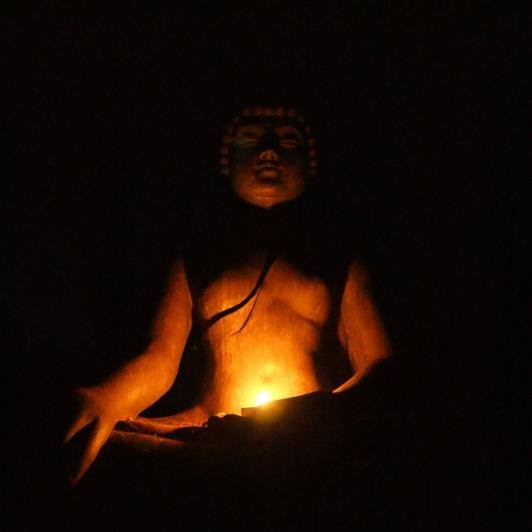
As I began this project, I struggled a bit with which format I would use to express my philosophy. Would it be essay, would it be aphorism, or, maybe, would it be verse? I jumped around a bit and have a fair bit in each category. While I seemed to hit a wall in both the essay and aphoristic formats, the verse format just seemed to work well. Soon, I had quite a collection of rough drafts.
What will the final project look like, I cannot say. But, for now, I am pursuing a verse format to bring my philosophy into written form. What I envision is each installment having a section of verse followed by a brief commentary. Eventually, the installments will be collected and revised, based in part on reader comments, and issued in book form. Sort of like the Tao Te Ching. Except this would be the Tao Te Tim, or maybe the Tao Tim Ching?
So, without further ado, let’s get to the first installment:
#1
The warrior soul is incomplete
It leans against a wall of its own making
The wall defines and limits
The sage knocks down their wall
Steps into the world of absolute consciousness
That is, experience without cognition
Thus, the sage sees all as it is
The warrior responds aggressively
To the wall they built
The sage responds appropriately
To what really is
Many people today claim to follow a “warrior’s path.” But what does that even mean? What it means is limitation. The warrior is defined by what they are opposed to. That is the “wall” which they choose to lean upon—what they choose to oppose. And that is, indeed, a choice. That wall represents limitation and allowing oneself to be defined by others.
To be a sage is to be beyond limitation. Thus, the sage breaks down the wall and moves beyond the limited state of the warrior. In the warrior’s world, they show aggression and fight because something is defined as the other, which they choose to oppose. Since the sage has no defined limits, they have no other which to oppose. They see only what really is. This is analogous to the concept of “pure experience” (experience prior to any cognition) promulgated by William James.
Within this state of absolute consciousness, the sage is free of any prejudice and may then respond appropriately to any situation. So, while the warrior expends him or herself in passionate opposition to a chosen other, the sage responds dispassionately and appropriately to something they recognize that they are, ultimately, one with.